

Love your old Kingston house but dread hauling window units up the stairs every June? Kingston and West Side houses from the early 1900s were usually built for radiators, not ducts. That doesn’t leave you stuck with cold rooms and noisy window units. You have several good ways to heat and cool a home without ducts, and some leave your radiators right where they are.
What Are Your Main Options Without Ductwork?
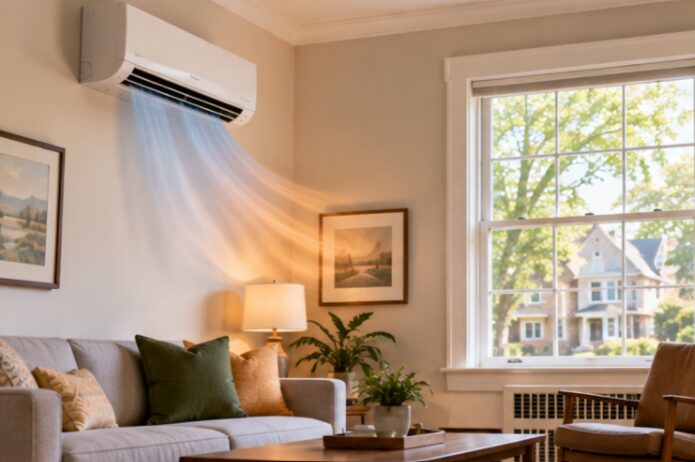
Without ducts, the first decision isn’t which brand to buy. It’s how you want heated and cooled air delivered to each room. That depends on your layout, current heating, electrical panel, insulation, and how much construction you’ll accept.
| Option | Best Fit | Main Advantage |
|---|---|---|
| Ductless mini-split | Individual rooms or smaller homes | Heating and cooling without ductwork |
| Multi-zone mini-split | Multiple rooms or floors | Separate temperature control |
| Ducted mini-split | A few rooms where short hidden ducts fit | Hidden air handler with short duct runs |
| Central HVAC with new ductwork | Major renovations or accessible spaces | Traditional whole-home distribution |
| Ducted heat pump with new ductwork | Whole-home central heating and cooling | One system for both, with vents in every room |
Here’s the key point: a home without ducts doesn’t automatically need new ductwork. Every mini-split on this list is a heat pump, so each one heats and cools. A qualified HVAC contractor can tell you whether ductless, partly ducted, or fully ducted makes the most sense.
Is a Ductless Mini-Split a Good Option for an Older Kingston Home?
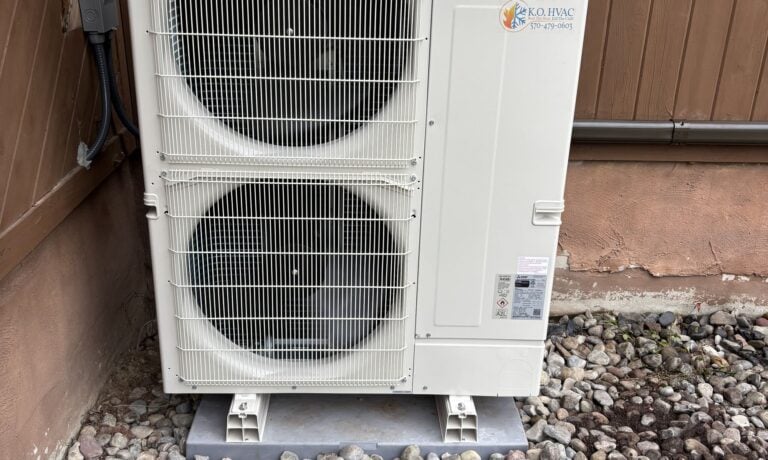
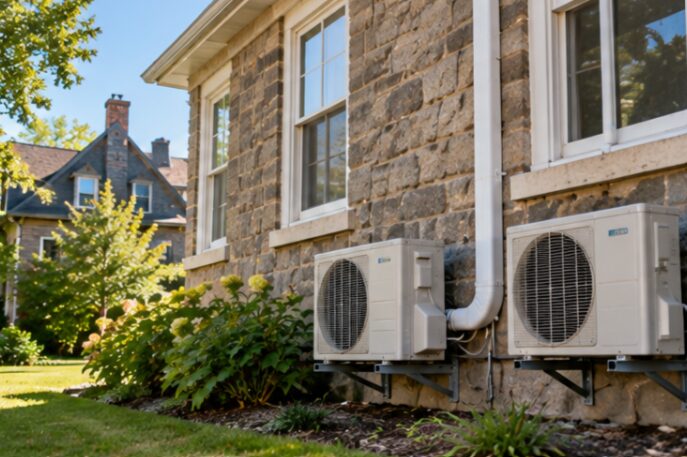
Ductless mini-splits are a natural fit for older homes because they skip the big supply and return ducts. Small refrigerant lines run from an outdoor unit to indoor units in the rooms you choose. That usually means a small hole in the wall, not torn-up ceilings.
Older Homes With Limited Space
Plaster walls, narrow framing, and finished ceilings turn new ductwork into a big remodeling job. Ductless equipment avoids most of that and still gives you heating and cooling.
Homes With Individual Comfort Problems
Got a bedroom, addition, or attic room that’s never comfortable? One indoor unit can fix that room without touching the rest of the house.
Homes With Multiple Comfort Zones
A multi-zone system connects several indoor units to one outdoor unit. Each area gets its own setting, so upstairs and downstairs don’t have to fight over one thermostat.
Homes Replacing Older Heating Equipment
Is your boiler, oil heat, or electric baseboard near the end of its life? A ductless heat pump system may replace it and add cooling at the same time.
Homes Where Appearance Matters
Indoor units are visible, so plan placement before install day. A good installer will show you wall, floor, and ceiling options and where each one moves air best.
Ductless isn’t the right answer for every older home. Layout, insulation, outdoor unit placement, electrical needs, winter heating, and zone count all shape the design. A proper evaluation should come before anyone picks equipment or counts indoor units.
Can You Add Central HVAC Without Existing Ductwork?
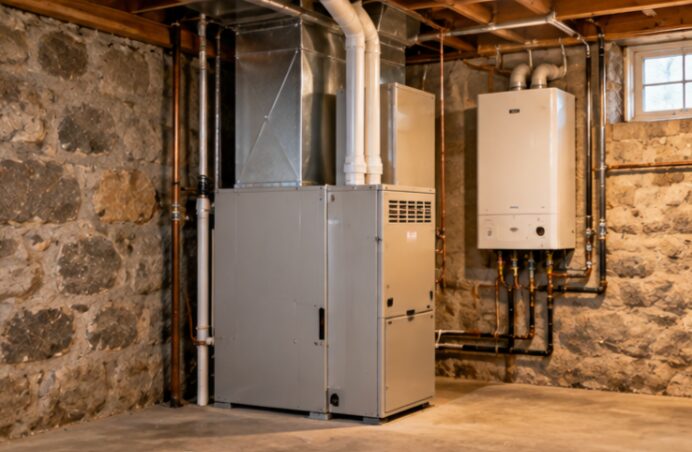
You can add central HVAC to a home without ducts, but it becomes a much bigger construction project. The contractor has to find where supply and return ducts can run and how big they need to be. They also need to plan around your finished rooms.
Possible ductwork locations include:
- Attics and unfinished upper spaces
- Basements and crawlspaces
- Closets or utility areas
- Soffits and dropped ceilings
- Interior wall or floor cavities
- Purpose-built chases during renovations
The challenge isn’t just finding space for a duct. The system needs properly sized supply and return paths, good airflow, and insulation wherever ducts cross an attic or crawlspace. If you’re already planning a major renovation, adding ducts gets a lot more practical.
Want true central air? AC installation is still possible without existing ducts. Just expect it to be priced as a full system design, not an equipment swap. The ductwork becomes a big part of the job.
What Should You Compare Before Choosing a System?
The cheapest equipment isn’t always the cheapest project once construction, wiring, controls, and upkeep are added. Before you choose, compare the full scope and how each option would work in your house.
| Question | Why It Matters |
|---|---|
| How will each room receive conditioned air? | Determines comfort and system layout |
| Where will equipment be installed? | Affects access, appearance, and service |
| Does the home need electrical upgrades? | Some systems have different electrical requirements |
| How many zones are appropriate? | Helps avoid unnecessary equipment |
| What construction is required? | Ductwork can significantly change project scope |
| How will the system be maintained? | Access affects future service costs |
| What happens during very cold weather? | Important when relying on heat-pump heating |
Ask each contractor to explain why they recommend a system, not just the model and price. Two good contractors can suggest different approaches. They may be solving different comfort problems or reading your house differently.
A good proposal makes those differences easy to see. Look for clear equipment specs, installation scope, warranty terms, expected maintenance, and anything left out of the price.
How Much Does It Cost to Add Heating and Cooling Without Ducts?
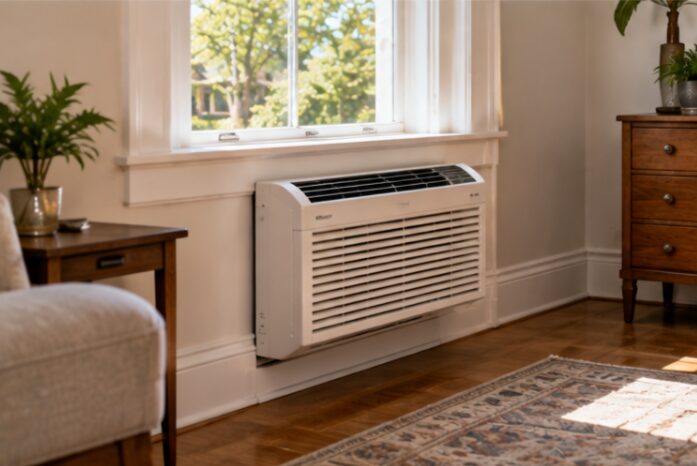
There’s no single price, because the job can be one indoor unit or a whole-home multi-zone system. Zone count, equipment size, electrical work, and access all change the final number.
For general planning, homeowners may encounter:
- Single-zone mini-split: about $4,000–$7,000 installed
- Multi-zone ductless system: about $10,000–$25,000
- Ducted heat pump: about $6,000–$14,000, plus $2,000 or more when new ductwork is needed
- Ductwork through finished spaces: can run higher, depending on access and how much wall and ceiling work it takes
These are broad market ranges, not a quote. Your written quote sets the exact number after someone sees the house, especially with new ducts, electrical work, or several zones.
When comparing proposals, look past the equipment price. Ask whether installation, controls, electrical work, permits, old equipment removal, startup testing, and warranty are included. A small price gap can hide a big difference in scope.
Should You Keep Your Existing Heating System?
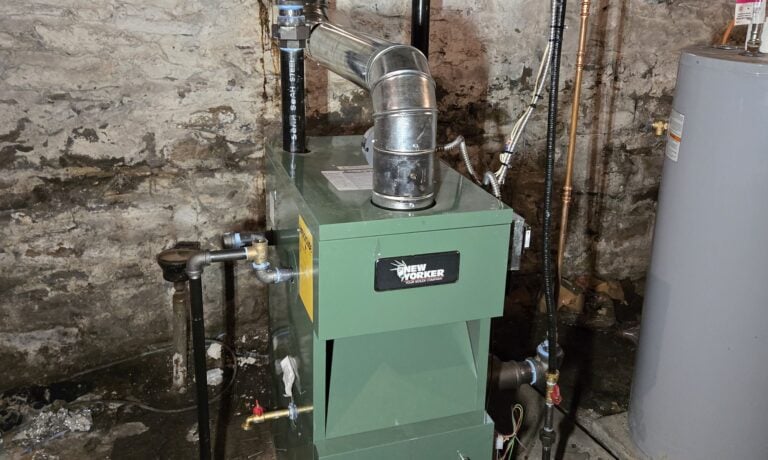
Adding cooling or a heat pump doesn’t mean your boiler or baseboards have to go. Often, keeping the old system and adding a new one gives you more flexibility.
Keep It as Primary Heat
If your boiler heats the whole house reliably, there’s no rush to replace it. You can add cooling on its own and keep using the heat you have.
Use a Heat Pump as Primary
A well-designed heat pump can handle both heating and cooling on its own. Before recommending that, the contractor should check your home’s heat loss and how the equipment performs in cold weather.
Use Both Systems Together
Some homeowners let a heat pump do most of the heating and keep the boiler for the coldest days. The controls have to be set up so the two systems work together, not against each other.
Replace Everything During Renovation
If the old system is already unreliable and you’re remodeling anyway, replacing everything at once can be easier to coordinate.
The right answer depends on your current equipment and what you want the new system to do. If you keep a boiler or other fuel-burning heat, keep a CO alarm on every level and near bedrooms. A good contractor should explain both the replace option and the keep-and-add option.
FAQs
Where do indoor units go in a house with plaster walls?
Indoor units in a plaster-walled house usually mount high on an exterior wall, where refrigerant lines can exit through a small hole. Floor-mounted units can sit where a radiator or window unit once was. Your installer should check the wall and framing first, so the lines run cleanly with as little patching as possible.
Is a mini-split loud inside the house?
Indoor mini-split units are quiet. On low speed, most make a soft hum you stop noticing. The compressor sits in the outdoor unit, so the loudest part stays outside. Placement still matters, so ask your installer to keep indoor units away from headboards if you’re a light sleeper.
Can I keep my boiler and add ductless air conditioning?
You can usually keep a working boiler and add ductless air conditioning. The radiators keep heating the house, and the mini-split adds cooling. It can also add heat on mild days, which takes some load off the boiler. Just make sure the controls are set so both systems don’t run against each other.
Does installing new ductwork damage an older home?
New ductwork doesn’t have to damage an older home. How much work it takes depends on where ducts can run. Attics, basements, crawlspaces, closets, and built-in chases often give a path without opening finished walls and ceilings. A careful contractor maps the route before cutting anything.
Should I choose ductless or new ductwork?
Choosing between ductless and new ductwork comes down to your house and your priorities. Ductless usually means far less construction. New ductwork gives you traditional vents in every room. A qualified HVAC contractor can compare both after walking through your home.
Old House, No Ducts? KO HVAC Has a Plan for That
Ductless mini-splits are our specialty, and older homes without ducts are where they work best. We start by walking your house: the layout, your current heat, the rooms that bother you, and where equipment fits. Then we recommend an approach that fits the house instead of forcing it into a standard setup.
As a Mitsubishi Electric Elite Diamond Contractor, we install Mitsubishi ductless systems, including models designed for cold-climate heating. Our ductless mini-split installation covers unit placement, zoning, sizing, and easy access for future service.
Prefer a ducted system? We also offer heat pump installation service, and installs qualify for 0% financing for 36 months with approved credit. Give us a call or book online, and we’ll show you what your house can do without tearing it apart.