

An old boiler doesn’t need replacing just because it’s past its tenth birthday. What matters is how well it heats your home and how often it needs repairs. Parts availability matters too, and so does whether the problems now involve major components.
That makes the repair-or-replace call harder than it looks. A dependable boiler may need only a small fix. Repeated breakdowns, rising repair bills, cold radiators, or a major part failing can point toward replacement. Knowing the difference helps you decide before the next cold snap.
How Do You Know Your Boiler Is Aging?
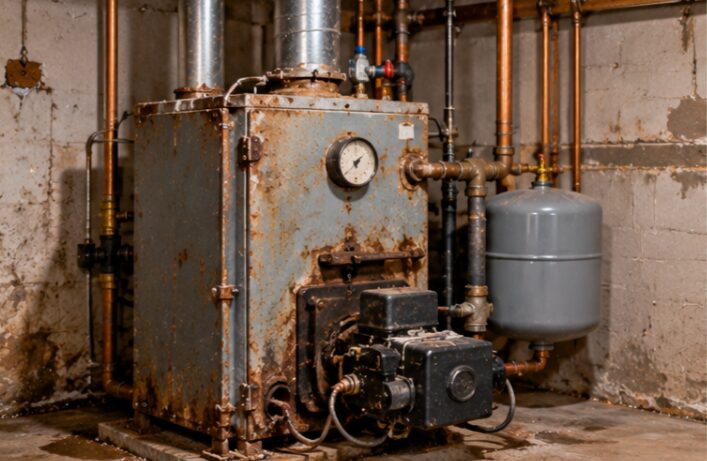
Age matters, but the date on the label is only part of the story. An old boiler may run reliably for years, or slowly develop pressure, circulation, or ignition problems. How it’s behaved lately tells you more than its age.
Pay attention to these changes:
- More frequent repairs: Several service calls within one or two heating seasons can indicate declining reliability.
- Uneven heating: Cold radiators or rooms may point to circulation, controls, or system-balance problems.
- Strange noises: Banging, rumbling, whistling, or repeated clicking should be investigated rather than dismissed as normal aging.
- Pressure changes: Repeatedly losing or gaining pressure can indicate a problem within the heating system.
- Higher heating costs: Rising fuel use can result from declining efficiency, controls, insulation, or other home conditions.
- Visible corrosion or leaks: Rust, water around components, or staining deserves professional attention.
One symptom doesn’t mean the whole boiler has to go. A bad circulator pump, expansion tank, valve, or thermostat can often be replaced on its own. A proper diagnosis should find the real cause before you spend big.
Does Your Home Have Steam Heat?
Kingston and West Side homes from the early 1900s often run on steam, not hot water. Steam boilers show their own warning signs:
- Low water in the sight glass: The small glass tube on the boiler should show water roughly half to two-thirds full.
- Banging pipes: Loud knocks often mean water is trapped in pipes that have lost their slope.
- Some radiators stay cold: A stuck air vent on the radiator can keep steam out.
- The boiler shuts off on low water: A safety switch called a low-water cutoff stops the burner before damage happens.
Steam systems run at very low pressure, so the hot-water pressure advice below doesn’t apply to them. Your technician should know which system you have before anything gets adjusted.
When Does Boiler Repair Make More Sense?
Repair makes sense when the boiler has been reliable and the problem sits in one fixable part. With an older boiler, the goal isn’t just getting heat back tonight. You want to know the repair will carry you through another heating season.
| Situation | What It May Suggest |
|---|---|
| One failed circulator | Repair may be practical |
| Faulty thermostat or control | Usually an isolated repair |
| Minor valve problem | Repair may extend useful life |
| Occasional ignition issue | Requires diagnosis before deciding |
| Repeated major component failures | Replacement deserves consideration |
| Heat exchanger problem | Replacement may be more practical |
The rest of the boiler matters as much as the part that failed. A sound boiler with one worn part is a good candidate for boiler repair. Putting an expensive part into an unreliable boiler may only delay a replacement.
Ask the technician three things. What caused the failure? Are other parts wearing out? What should you expect from the boiler after the repair?
Why Does Boiler Maintenance Matter More as It Gets Older?
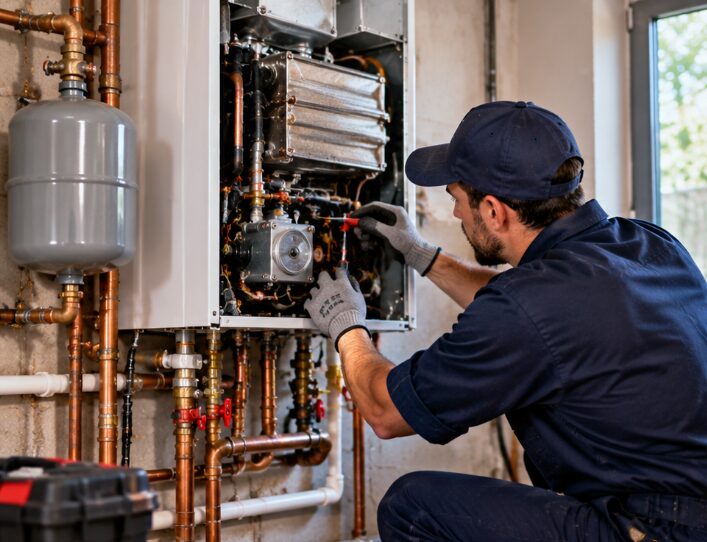
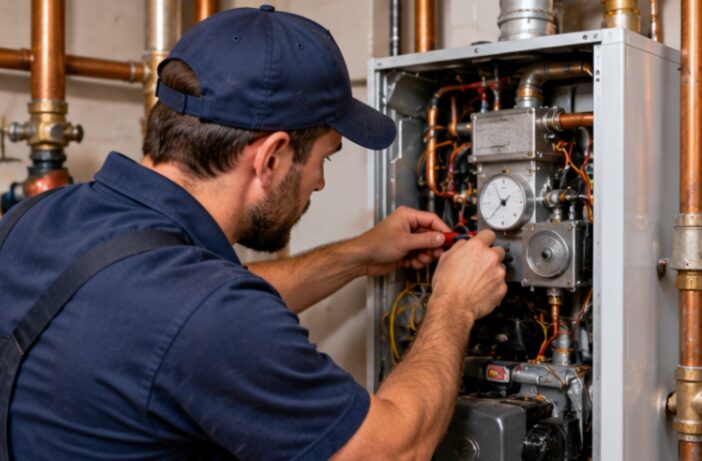
Yearly maintenance matters more as a boiler ages, because small changes grow into bigger problems. A fall inspection checks combustion, controls, circulation, safety parts, and signs of leaks or rust. That happens before the boiler starts working hardest through a Kingston winter.
Cleaning and Heat Transfer
Soot, scale, and dust keep heat from moving into the water. Oil boilers need a yearly cleaning plus a new nozzle and filter. Gas boilers need less cleaning, but their burners and heat surfaces still need a look.
Checking Safety Controls
Safety controls shut the boiler down when something goes wrong. A technician should test them, not assume they’ll work in an emergency.
Inspecting Water Pressure
A hot-water boiler usually sits around 12 to 15 psi when cold. Its relief valve opens at 30 psi to protect the system. If you keep adding water to hold pressure, have a technician find out why.
Evaluating Circulation
The circulator pump and valves move hot water through the house. Poor circulation shows up as uneven heat and repeat breakdowns.
Checking Combustion
Gas and oil boilers need their burner and chimney venting checked every year. A combustion test catches problems that waste fuel or let carbon monoxide build up.
A good maintenance visit is more than a quick look. The technician should explain what they checked and what needs attention now. They should also say what can safely wait. That record helps a lot when you’re deciding whether an old boiler is still worth keeping.
When Should You Consider Replacing an Aging Boiler?
Replacement is worth discussing when repairs, reliability, and condition stop adding up. No single age means every boiler should go. Look at the whole pattern instead: breakdowns, performance, parts, and the condition of major components.
Replacement deserves a closer look when:
- Major components are failing repeatedly
- The heat exchanger has serious damage
- Parts are becoming difficult to obtain
- The boiler requires frequent service
- Heating performance continues to decline
- Repair costs are becoming substantial
- The system no longer meets your comfort needs
Compare the cost of one more repair with the long-term cost of a new boiler, not just today’s bill. Picture two 25-year-old boilers. One needs a single circulator pump and has run well for years. The other needs its third major repair and still leaves the bedrooms cold. Same age, very different answers.
If you replace, don’t just match the old boiler’s size. Old boilers were often oversized, and many houses have since added insulation and new windows. A qualified contractor should calculate your heat loss and check your pipes and radiators first. Proper sizing is a big part of a good boiler installation service.
How Much Should You Budget for Boiler Repair or Replacement?

Boiler costs vary a lot, because the job can be one part or a whole new heating system. Boiler type, access, venting, piping, controls, and removal of the old boiler all change the price. Treat these ranges as a starting point, not a quote.
| Project | General Planning Range |
|---|---|
| Most boiler repairs | About $150–$750 |
| Major part replacement | $1,000 or more |
| Standard gas or oil boiler replacement | About $5,000–$9,000 |
| High-efficiency condensing boiler | About $7,500–$14,000 |
Your written quote sets the exact number. A simple part swap and a tough boiler-room install aren’t the same job, even if both get called “boiler repair.” Piping, venting, controls, and removal can move a replacement quote a lot.
Before approving expensive work, ask what’s failing, what the repair includes, and whether they found other wear. If replacement comes up, get the equipment details, scope, warranty, and a line-by-line breakdown. Then you can compare proposals fairly.
When Is an Old Boiler a Safety Problem?
Some boiler problems can’t wait for a convenient day:
- You smell gas: Leave the house and call UGI or 911 from outside.
- Your CO alarm sounds: Get everyone outside and call 911.
- Water sprays from the relief valve: Turn the boiler off and call for service.
- The boiler is leaking: Even small drips need a look before they reach the wiring or burner.
Keep a CO alarm on every level and near bedrooms. A yearly combustion check is the best way to catch venting problems early.
FAQs
Why do my radiator pipes bang?
Banging radiator pipes usually point to a steam system with trapped water. Pipes that have sagged, or radiators tilted the wrong way, keep water from draining back to the boiler. When steam hits that water, you hear the knock. A technician can re-pitch pipes, level radiators, and check the boiler’s water level.
Should I repair a boiler that is more than 15 years old?
A boiler over 15 years old can still be worth repairing. If it’s been reliable and the problem is one fixable part, repair often makes sense. Cast-iron boilers often run 20 to 30 years or more with yearly service. Frequent breakdowns or a cracked heat exchanger make replacement worth a look.
How often should an older boiler be maintained?
An older boiler should get professional maintenance once a year, ideally in early fall before heavy use. Oil boilers need that yearly visit for cleaning and a new nozzle and filter. Gas boilers need a yearly combustion and safety check. Your manufacturer may list extra steps for your model.
Can I add water to my boiler myself?
Topping off a steam boiler is a common homeowner task, but only if you’ve been shown how. Add water slowly, and only when the boiler is cool. On a hot-water boiler, the fill valve should handle this automatically. If you’re adding water often, a leak or bad part needs a technician.
How long does a boiler replacement take?
Most boiler replacements take one to two days. A same-type swap in an easy-to-reach basement can often finish in a day. Switching fuel, changing the venting, or reworking piping adds time. Ask your contractor whether you’ll be without heat overnight, so you can plan around cold weather.
Need a Straight Answer on Your Old Boiler? Ask KO HVAC
We don’t lead with replacement. We work on oil and gas boilers, steam and hot water, and we’ll tell you plainly whether yours has more winters in it. Every repair visit starts with a $99 diagnostic, so you know what finding the problem costs before we start.
When it’s time to replace, our boiler installation service starts with your home’s heat loss, not the old boiler’s size. You’ll get clear options in writing, and installs qualify for 0% financing for 36 months with approved credit.
Banging pipes, falling pressure, or cold radiators? Give us a call or book online for a repair or seasonal boiler maintenance. We’ll tell you what we find and what we’d do in your shoes.