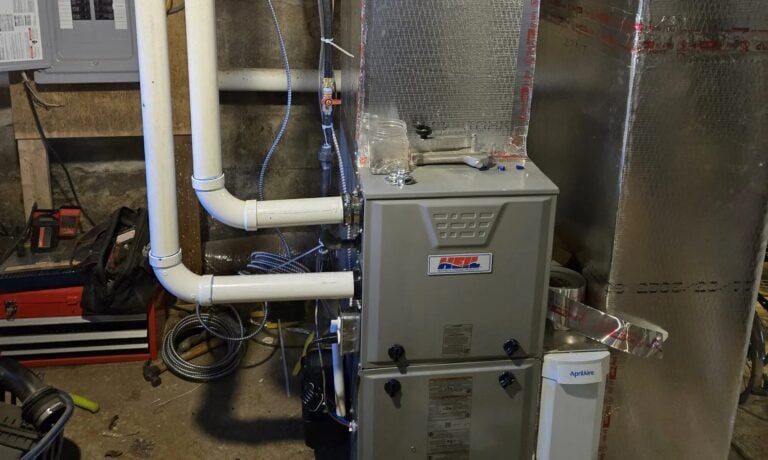


Can you replace your existing boiler or oil furnace with mini-splits and heat your entire Kingston home? Or would you be better off installing one in the upstairs bedroom, finished attic, or addition that never seems to get warm?
The answer depends on your house. A properly designed mini-split system can heat an entire home through a Pennsylvania winter, but that does not mean one indoor unit will keep every room comfortable. Your home's insulation, layout, heating requirements, and outdoor temperatures all influence the right installation.
There are three practical ways to use mini-splits: as your home's only heating system, to supplement existing heat in certain rooms, or alongside your current boiler or oil furnace. Let's look at how each setup works and which one makes the most sense for your Kingston home.
Can a Mini-Split Really Heat an Entire House?

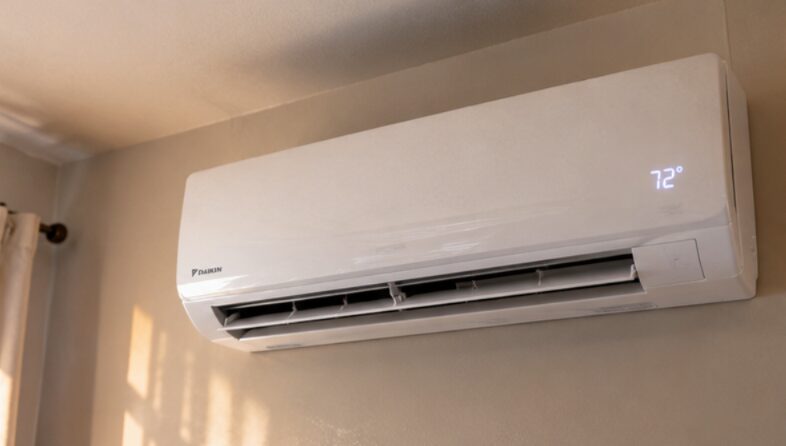
Yes, a properly sized multi-zone mini-split system can provide heating throughout an entire house. Unlike a traditional furnace that distributes warm air through ductwork, a mini-split delivers heated air directly into individual rooms through indoor units connected to an outdoor heat pump.
A single-zone system typically has one indoor unit serving one area. A multi-zone system connects multiple indoor units to an outdoor unit, allowing different areas of the home to receive heating independently. This makes ductless systems particularly useful in older Kingston homes that were built without central air ducts.
However, the number and placement of indoor units matter. One unit in the living room may heat an open living and dining area, but it will not necessarily provide enough warmth to separate bedrooms, an upstairs hallway, or a finished attic. Walls, closed doors, ceiling height, and room layout all affect how heat moves through the house.
The important thing is to design the system around your home's actual heating needs, not just its square footage. A well-insulated ranch with an open floor plan may be a good candidate for whole-house mini-splits, while an older two-story home may need a different arrangement.
Setup One: Using Mini-Splits as Your Home's Only Heating System
If you're planning to replace your oil furnace or boiler completely, a whole-house mini-split system may be an option worth considering. This setup works best in newer, well-insulated homes where multiple indoor units can provide enough heat for the living areas, bedrooms, and other frequently used spaces.
For example, a newer home in Kingston with an open living room, kitchen, and dining area could use one indoor unit for the main living space and additional units for separate bedrooms. Instead of relying on radiators or a furnace, the mini-split system handles both winter heating and summer cooling. If your home already has good ductwork, a ducted heat pump installation is another all-electric option to compare.
This arrangement makes the most sense when your home has:
- Good insulation, properly sealed windows, and minimal drafts.
- An open layout or suitable locations for indoor units in separate rooms.
- No ductwork, and no plans to add it.
- Heating equipment that is aging or becoming expensive to repair.
- Enough electrical capacity to support the new heat pump system.
Kingston winters require equipment designed for reliable low-temperature heating. Before replacing your existing system, have a contractor assess your home's heating load and recommend properly sized equipment. Explore our ductless mini-split installation services to find a system suited to your home's layout and winter heating needs.
Setup Two: Installing Mini-Splits in Rooms Your Existing Heating System Misses
You do not always need to replace your entire heating system to benefit from mini-splits. Sometimes the problem is limited to one or two rooms that never seem comfortable, even when the boiler or oil furnace is running.
This is common in older homes where additions, finished attics, or upstairs bedrooms were never properly connected to the original heating system. A ductless unit in the problem area can provide additional heating without requiring a complete replacement. If you're weighing other ways to heat and cool rooms like these, our guide to heating and cooling options without ductwork compares them.
Where Can a Mini-Split Make the Biggest Difference?
- Finished attics: Converted attic spaces may not have adequate access to the home's original heating system.
- Home additions: A new family room or sunroom may not have enough heating capacity from existing radiators or ductwork.
- Upstairs bedrooms: Uneven heat distribution can leave upper floors colder than downstairs living areas.
- Home offices: A dedicated indoor unit can provide comfortable temperatures in a frequently used workspace.
The biggest advantage is targeted comfort. You can heat the rooms you actually use instead of modifying the entire heating system.
However, do not expect one indoor unit to heat several separate rooms simply because they are nearby. Mini-splits deliver heat directly into the spaces where they are installed. Walls, closed doors, and room layout can prevent warm air from reaching other areas.
If your existing boiler or furnace heats the rest of the house reliably, adding a mini-split to the problem area may be more practical than replacing the entire system.
Setup Three: Keeping Your Boiler or Oil Furnace Alongside Mini-Splits
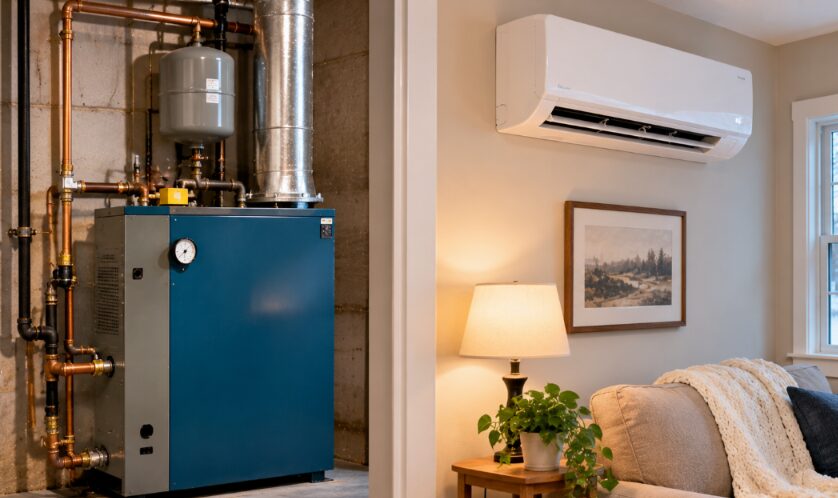
For many older Kingston homes, this may be the most practical arrangement. You keep your existing boiler or oil furnace and install mini-splits to provide additional heating and air conditioning. This allows you to improve comfort without removing equipment that is still working properly.
For example, imagine an older two-story home with cast-iron radiators. The boiler heats the downstairs living areas comfortably, but the upstairs bedrooms remain cold during winter. The homeowner also wants air conditioning but does not want to install ductwork throughout the house.
A mini-split installed upstairs can provide additional heating in winter and cooling during summer. Meanwhile, the boiler continues serving the existing radiators, and timely boiler repair keeps it dependable as backup heat.
Keeping your current heating equipment while adding mini-splits can help you:
- Avoid removing a working boiler or oil furnace.
- Improve comfort in rooms with uneven heating.
- Add air conditioning without installing central ductwork.
- Retain your existing heating system as supplemental heat.
- Upgrade your home's comfort without taking on a complete heating conversion.
There is one important consideration: the two systems should be planned to work together. Thermostat settings and room usage matter because you do not want the boiler and mini-split unnecessarily heating the same spaces at the same time.
If your existing heating equipment is still in good condition, this hybrid arrangement can be a sensible way to improve comfort while keeping your options open.
Will a Mini-Split Work During Kingston's Coldest Winter Weather?
Yes, but the equipment needs to be selected for local winter conditions. Kingston's January average low is approximately 20.3°F, based on climate normals from the nearby Wilkes-Barre International Airport weather station. Homes in the Back Mountain and Mountain Top can experience colder conditions and more snow exposure than properties on the valley floor.
A cold-climate mini-split is designed to provide heating in lower outdoor temperatures than many standard heat pump models. Mitsubishi Electric's Hyper-Heat models, for example, are built to keep heating at outdoor temperatures as low as -13°F, depending on the model. However, its heating capacity still changes as temperatures fall. A system that works comfortably during mild winter weather may need supplemental heating during a particularly cold spell.
What Should Your Contractor Consider?
- Low-temperature performance: How much heat can the selected model deliver at the outdoor temperatures your home may experience?
- Home insulation: Are walls, attic spaces, windows, and doors allowing too much heat to escape?
- Room-by-room heating needs: Does each indoor unit have enough capacity for the space it serves?
- Backup heating: Should your existing boiler or oil furnace remain available during extremely cold conditions?
- Outdoor unit placement: Is there enough clearance for airflow, snow accumulation, and normal defrost drainage?
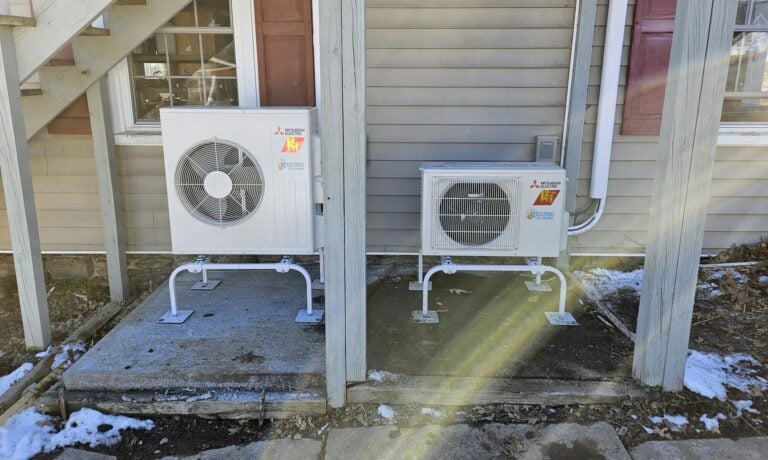
Outdoor placement deserves particular attention in the Back Mountain and Mountain Top. Snow drifting around an outdoor unit or runoff sliding from a roof can obstruct airflow and interfere with operation. The unit needs a suitable location, proper mounting height where required, and sufficient clearance.
A properly selected cold-climate mini-split can provide dependable winter heating, but the installation must account for the actual conditions around your property.
How Many Mini-Split Units Does Your House Actually Need?
There is no universal rule that one mini-split indoor unit can heat a certain number of square feet. The number depends on room dimensions, insulation, ceiling height, windows, layout, and how you use each space.
An open-plan ranch may need a different configuration from a two-story home with several closed bedrooms. A single indoor unit might heat a large open living area effectively, but it may not distribute enough warmth into separate rooms.
Here are a few examples of how different properties might be approached:
| Home layout | Possible mini-split setup |
|---|---|
| Open-plan ranch | One or more strategically positioned units |
| Two-story home | Separate indoor units for upstairs and downstairs |
| Finished attic | Dedicated unit for the attic space |
| Older home with radiators | Selected mini-splits alongside existing heating |
| Home addition or sunroom | Dedicated single-zone system |
These are starting points, not installation specifications. A contractor should calculate the home's heating load before recommending equipment. Oversized units are not automatically better, while undersized systems may struggle to maintain comfortable temperatures during colder weather.
The installation plan should also consider indoor unit placement, refrigerant line routing, electrical requirements, outdoor unit location, and access for future maintenance.
Which Mini-Split Setup Makes the Most Sense for Your Kingston Home?
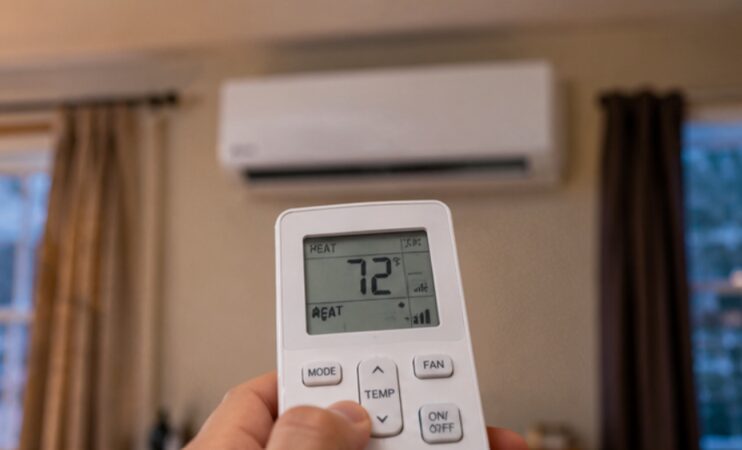
The right choice depends on what you want to improve and how your existing heating system performs. Rather than assuming every homeowner needs a whole-house installation, consider these three situations:
- Choose whole-house mini-splits if: Your home is newer, well insulated, and has a layout that can be served by a properly designed multi-zone system. This can be a practical replacement for an older furnace or boiler.
- Choose room-specific mini-splits if: Your existing heating system works well in most areas, but additions, finished attics, or upstairs bedrooms remain uncomfortable. You may only need targeted heating and cooling.
- Keep your boiler or oil furnace and add mini-splits if: You live in an older home, want air conditioning, and prefer not to remove a heating system that is still reliable. The mini-splits can supplement heating in selected rooms.
Why Choose KO HVAC for Mini-Split Installation in Kingston, PA?
Choosing a mini-split involves more than selecting an indoor unit and mounting it on the wall. Proper sizing, indoor unit placement, and outdoor equipment location all affect how well the system heats and cools your home. At KO HVAC Heating & Cooling, we consider your home's layout, existing heating equipment, and comfort needs before recommending a ductless solution.
As a Mitsubishi Electric Elite Diamond Contractor, our team has manufacturer-specific training to help homeowners understand equipment options and system configurations. Whether you want to heat your entire house, improve an upstairs bedroom, or add air conditioning while keeping your existing boiler, our team can help you explore the right setup.
We also offer yearly heating and cooling maintenance to help keep your equipment operating reliably. Ask about our financing options, including 0% for 36 months on new installations. To book a home visit, call 570-479-0603.
Frequently Asked Questions
Can one mini-split heat a 2,000-square-foot house?
It depends on the home's layout, insulation, ceiling height, and heating requirements. One indoor unit may not distribute heat evenly throughout a 2,000-square-foot home with multiple floors and separate rooms, because walls and closed doors block the warm air. A multi-zone system with indoor units in the main living areas and bedrooms is usually more appropriate.
Do mini-splits work below freezing in Pennsylvania?
Yes. Cold-climate mini-splits are designed to provide heating in below-freezing conditions. However, available heating capacity decreases as outdoor temperatures fall, so equipment should be selected using its low-temperature performance specifications.
Can I keep my oil furnace and install a mini-split?
Absolutely. You can keep your existing oil furnace as your primary or supplemental heating source while using mini-splits in selected rooms. This can be a practical option when your current equipment is still reliable, and it gives you backup heat on the coldest nights. Plan thermostat settings so both systems are not heating the same rooms at once.
Are mini-splits cheaper to run than oil heat?
Operating costs depend on electricity and oil prices, equipment efficiency at actual outdoor temperatures, and your home's heating requirements. Comparing your current fuel expenses with the mini-split's expected seasonal performance will provide a more useful answer.
Do mini-splits provide air conditioning in summer?
Yes. Most mini-splits are reversible heat pumps that provide both heating and cooling. This makes them especially useful in older homes that rely on boilers or radiators and do not have central air conditioning.
How often should a mini-split be maintained?
Check and clean indoor filters regularly according to the manufacturer's instructions. Professional maintenance should also include inspecting the indoor and outdoor coils, drainage, electrical components, and refrigerant system.